The LLM Wiki vault came from a worry I kept running into while using agents for research. If an agent reads a source, writes a summary, then later reads its own summary as if it were the source, the knowledge base starts to rot. The writing may look clean, but the provenance gets weaker every time the system compresses itself.
I wanted a structure where an agent could help maintain a research wiki without being allowed to corrupt the raw material. The solution was a three-layer vault: raw sources, wiki synthesis, and schema rules. The source layer is treated as immutable. The wiki layer can evolve. The schema tells the agent what it may touch, what it must cite, and what requires human review.
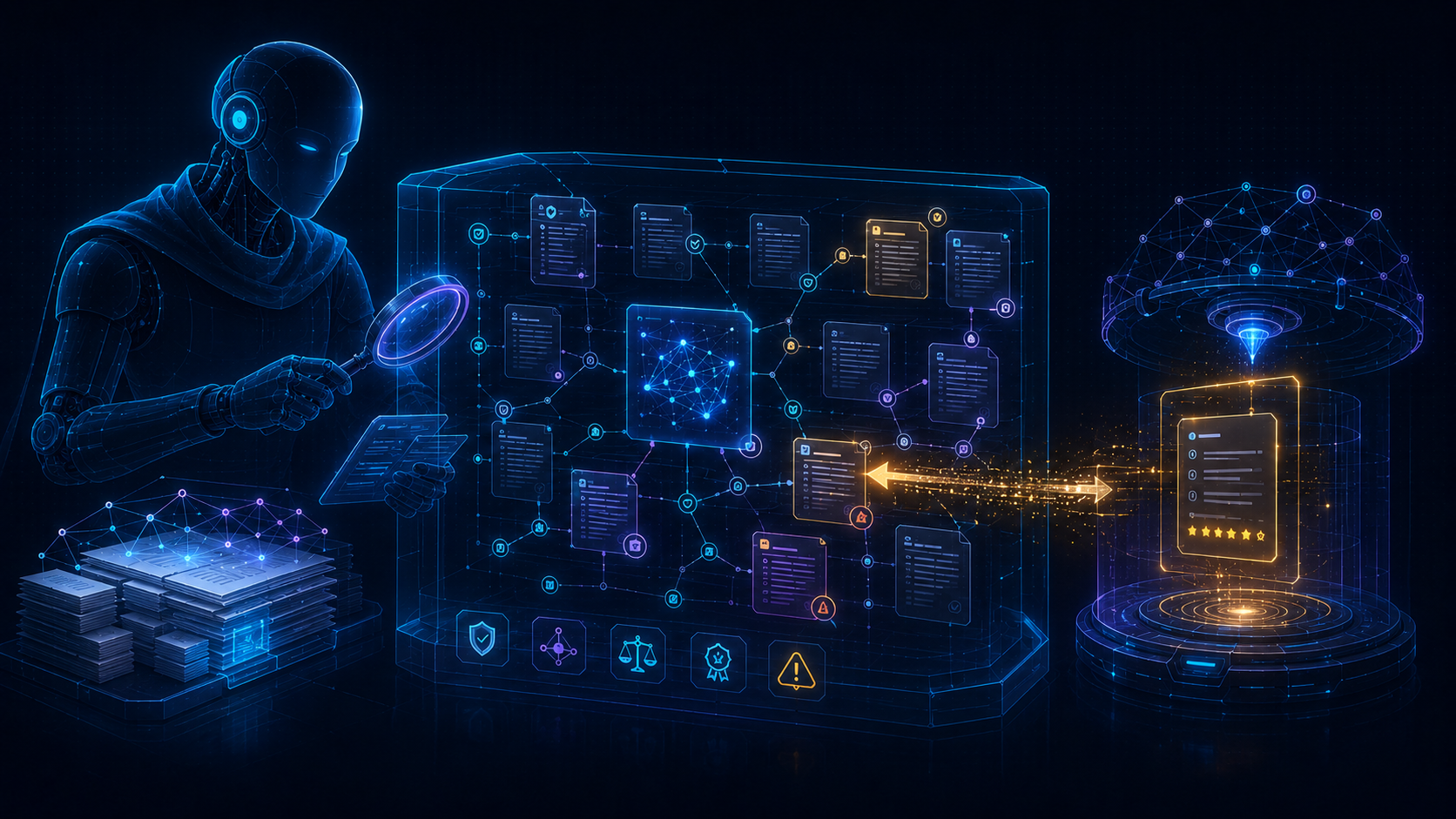
The source layer is protected
Source notes live in a dedicated folder. The reference and notes sections are not edited after ingest. The agent can append integration sections such as key takeaways, wiki updates, cited-by links, extraction version, and ingest timestamp. It cannot rewrite the source body to make later synthesis easier.
That rule looks strict until you need to debug a claim. If a page says something about a paper, policy, or technical article, I want to trace it back to the exact source note that supported it. If the source note has been rewritten by the same agent doing the synthesis, that trace becomes much less useful.
Every claim needs a place to stand
The wiki layer uses entity pages, concept pages, comparison pages, atomic notes, and maps of content. The important rule is citation discipline. If a factual claim would make a reader ask "says who?", it needs a wiki link to an ingested source. That is slow, but it keeps the system honest.
Secondhand sources get special handling. If a literature review mentions a paper I have not read, the vault can create a stub, but the prose has to say that the claim is secondhand. This prevents a common failure mode where a review citation gets laundered into direct knowledge.
# reference
Original paper, article, or documentation link

# notes
Raw source body. The agent does not rewrite this section.

# key takeaways
- Source-backed bullets added after ingest

# cited by
- [[Concept Page]]

# ingested
2026-07-08 10:30
The index and log make the wiki navigable
A growing vault needs more than search. It needs a catalog and a history. The index lists sources, entities, concepts, comparisons, atomic notes, and MOCs. The log records operations such as ingests, notes, schema updates, and substantive queries. When an agent starts work, it reads the schema, the index, and the recent log tail before making changes.
That workflow makes the vault cumulative. New work can build on old work without guessing what exists. It also makes mistakes easier to audit because every mutation should show up in the log and every citation should have a backlink from the source.
Why this matters outside Obsidian
The pattern applies to any AI system that answers from trusted data. A customer-facing analytics agent needs a governed metric layer. A coding agent needs project rules and correction history. A research assistant needs source provenance. The surface changes, but the questions stay the same: what is the source, what is the scope, who approved the claim, and how do we fix it when it changes?
That is why I kept the vault plain. It is markdown, folders, links, and rules. The value is not a clever UI. The value is the boundary between evidence and synthesis, and the discipline that keeps the agent from mixing the two.